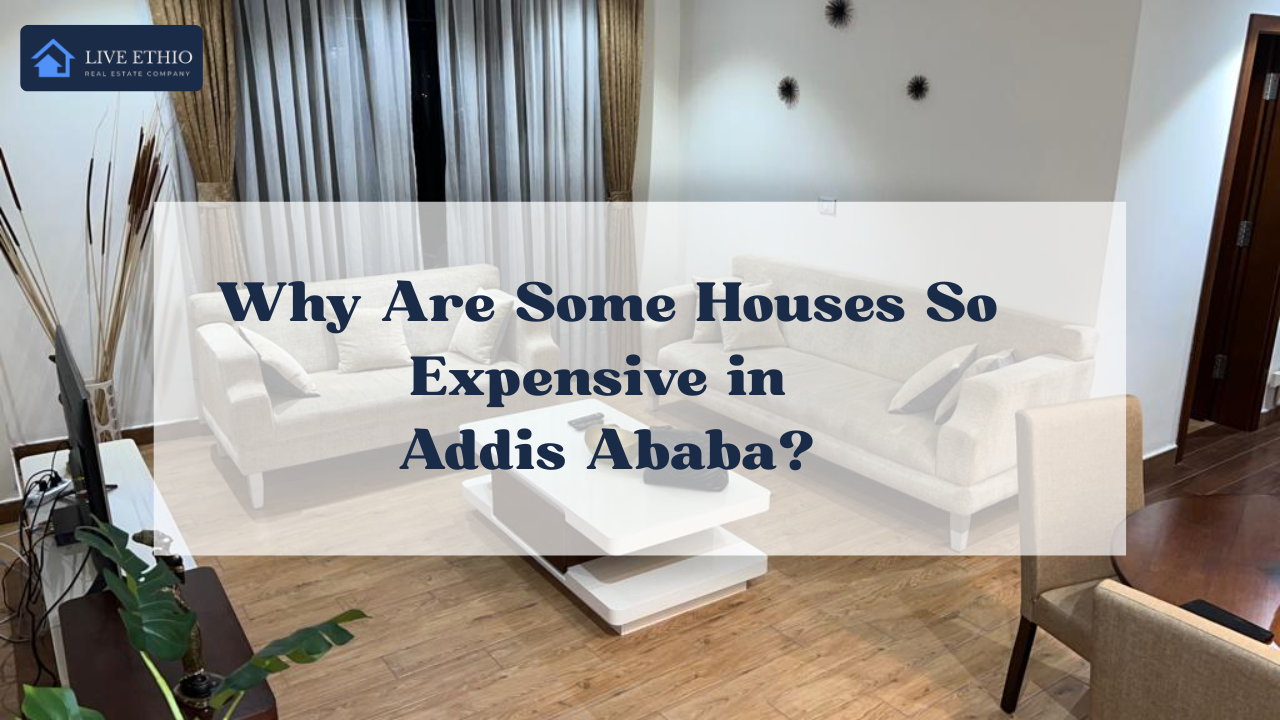
If you’ve been searching for property in Addis Ababa, you’ve likely noticed a wide range of prices from relatively affordable homes to properties that cost tens or even hundreds of millions of birr. This raises a common question among buyers, renters, and investors alike: Why are some houses so expensive in Addis Ababa?
The answer lies in a combination of location, demand, construction quality, legal factors, and broader economic trends. Understanding these elements will help you make smarter decisions whether you’re buying, renting, or investing in the city’s real estate market.
1. Location Drives Price More Than Anything Else
In Addis Ababa, location is the strongest price driver. Properties in areas such as Bole, Old Airport, Kazanchis, and parts of Sarbet command premium prices due to their proximity to:
- International schools and embassies
- Business districts and commercial hubs
- Major roads and transport links
- Hospitals, malls, and entertainment centers
Neighborhoods with strong infrastructure, security, and accessibility consistently outperform others in pricing.
2. Limited Land Supply in High-Demand Areas
Addis Ababa has a finite amount of centrally located land, and government land allocation policies limit how much new land enters the market each year. As demand continues to rise especially in prime zones prices increase naturally due to scarcity.
This land shortage makes well-located properties a long-term store of value, which further fuels high prices.
3. High Construction and Development Costs
Building a modern home or apartment in Addis Ababa is increasingly expensive due to:
- Rising material costs (cement, steel, finishing materials)
- Imported fixtures and appliances
- Skilled labor shortages
- Compliance with new building codes and safety standards
Developers pass these costs onto buyers, resulting in higher sales prices especially for newly built or luxury properties.
4. Quality of Construction and Finishing
Two properties in the same neighborhood can have very different prices based on construction quality and finishing.
High-priced homes typically feature:
- Modern architecture and design
- Quality plumbing and electrical systems
- High-end flooring, kitchens, and bathrooms
- Backup generators, elevators, and security systems
Buyers are willing to pay more for properties that offer durability, comfort, and lower long-term maintenance costs.
5. Legal Clarity and Documentation
Properties with clear, verified title deeds and proper registration are significantly more valuable than those with unclear ownership history or documentation issues.
Buyers are willing to pay a premium for:
- Legally compliant properties
- Registered land use rights or leasehold agreements
- Clean transaction history with no disputes
Legal certainty reduces risk and lower risk means higher price.
6. Investment Demand and Rental Yield Potential
Many buyers are not just purchasing homes to live in they’re investing for rental income or long-term appreciation.
Properties that:
- Attract expatriates or corporate tenants
- Can be used as furnished rentals or guest houses
- Are located in high-demand rental zones
often command higher prices because of their income-generating potential.
7. Inflation and Currency Pressure
Ethiopia’s broader economic conditions including inflation and currency fluctuations also impact property prices. Real estate is often viewed as a hedge against inflation, pushing more investors to move their money into property, which drives prices upward.
Some houses in Addis Ababa are expensive not by chance, but by design shaped by location, scarcity, construction quality, legal security, and investment demand. While high prices can be discouraging, understanding what drives them empowers you to evaluate value rather than just cost.
Whether you’re buying to live, rent, or invest, informed decisions supported by professional guidance will help you navigate Addis Ababa’s property market with confidence.