Building a new house is an exciting but complex journey and costs can escalate fast if you don’t understand all the components. Below is a breakdown of typical cost categories in a home build, and which parts tend to be the most expensive. This will help you plan your budget realistically, avoid surprises, and make better decisions if you build in Ethiopia (or elsewhere).
Typical Cost Breakdown: What Goes Into Building a House
According to recent international data:
- Site work & land-preparation (clearing the land, grading, excavation, utilities, surveys) typically takes about 7–8% of total building cost.
- Foundation/sub-structure (footings, slab or basement, retaining walls, concrete work) often accounts for around 10–11% of the construction cost.
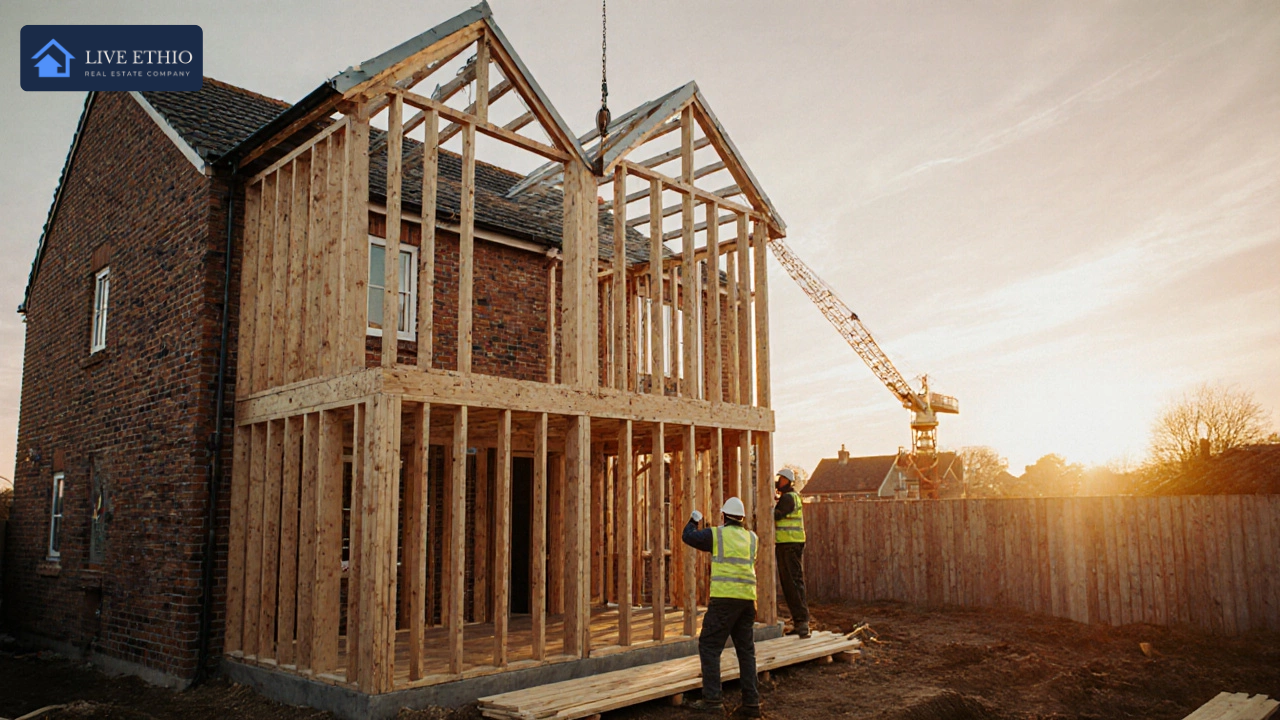
- Structural framing (the “skeleton”: walls, floors, roof trusses, beams) adds roughly 15–20% of total cost.
- Major systems (MEP: mechanical, electrical, plumbing, HVAC, rough-ins) plumbing, wiring, heating/cooling, ventilation also represent a significant share, often 15–20%.
- Interior finishes (flooring, tiling, painting, cabinetry, fixtures, kitchens, bathrooms, interior doors) are commonly the single largest expense, accounting for 20–30% of build costs.
- Exterior finishes (roofing materials, windows, exterior doors, siding, external walls) and final touches (landscaping, driveways, external fences) take smaller shares but still can add up, especially with high-end materials.
Because of these varying components, the “most expensive part” of building depends on your design choices, materials, and ambitions but interior finishes + structural system tend to dominate.
Why Foundation, Framing, Systems & Finishes Often Consume the Biggest Budget Shares
Foundation & Structure: the backbone of your home
The foundation supports everything: walls, roof, floors any mistake or cut-corner here risks the entire house’s integrity. As a result, foundation work tends to be costly, especially if the soil is poor, the plot is sloped, or extra reinforcement is required.
Once foundation is in place, framing becomes the “skeleton.” Building walls, floors, roofs either with timber, steel, or concrete uses large volumes of materials and demands skilled labor. For many builds, framing is the single largest material cost.
Cutting corners on framing or foundation is risky: it saves little but may lead to structural problems so most builders advise investing strongly here.
Systems (MEP): unseen but essential
After structure comes the “hidden network” plumbing, electrical wiring, drainage, water, sometimes HVAC or ventilation systems. Though these are not visible like floors or walls, they are critical for a functioning modern house.
Especially when a house has multiple bathrooms or levels, or if you plan on a kitchen, laundry, or strong water/electric demand the MEP costs rise. Because they require professional installation and must meet safety standards, mistakes here are costly and sometimes impossible to fix later without major rework.
Interior Finishes
Interior finishes are often the biggest chunk of the budget. Why? Because homeowners tend to customize them according to taste: flooring, tiling, paint, kitchen cabinetry and countertops, bathroom finishes, doors, closets, fixtures, lighting and these choices vary widely in price. Luxury finishes imported tiles, premium wood floors, granite or marble countertops, high-end fixtures significantly increase the final cost compared to basic materials. Moreover, because every room (bedrooms, bathrooms, kitchen, living rooms) uses finishes, the cost grows with the size and complexity of the house.
In modern homes, especially those built for resale or rental, owners frequently choose mid- to high-end finishes, so interior finishing becomes the most expensive part of the build.
What This Means for Ethiopia and What to Watch Out For
If you are building a new house in Ethiopia especially in a city like Addis Ababa these global patterns still largely apply. According to a recent local guide, average construction costs in urban Ethiopia range between ETB 35,000 and ETB 60,000 per square meter, depending on material quality, design complexity, and finishing level.
That means when you aim for above-standard finishes like imported tiles, modern fixtures, custom kitchens your interior finishes + structural components + systems will drive up costs significantly. For a 200 m² home at ETB 45,000/m², the baseline construction cost could reach around ETB 9 million and with better finishing or custom design, easily ETB 10–11 million after extra fees and finishing upgrades.
Also, keep in mind inflation and price fluctuations of steel, cement, fixtures, and imported materials. Many construction firms advise adding a 10–20% contingency to your budget to cover unexpected cost increases or delays
Finally, don’t forget “soft costs”: architectural plans, surveying, permits (if applicable), connections to utilities (water, electricity), and finishing touches like boundary walls, driveways, and external work these often get overlooked but together can add up to several percent of total cost.
Key Takeaways How to Plan and Control Your Budget
- Prioritize solid foundation and framing — cutting costs here is risky and rarely worth the savings.
- Choose realistic finishing standards: decide early whether you go for basic, mid-range or high-end finishes that decision will shape more than ¼ of your budget.
- Budget for mechanical systems (plumbing, electrical, water) properly especially if you plan multiple bathrooms or heavy water/electrical usage.
- Always add a contingency buffer (10–20 %) in your budget for material cost fluctuations, delays, and extras.
- Include soft costs (site preparation, permits, utility connections, landscaping) and don’t treat them as optional extras.
- For Ethiopia: use local cost-per-square-meter estimates (ETB 35,000–60,000) as a baseline, but adjust for finishing quality and local market fluctuations.