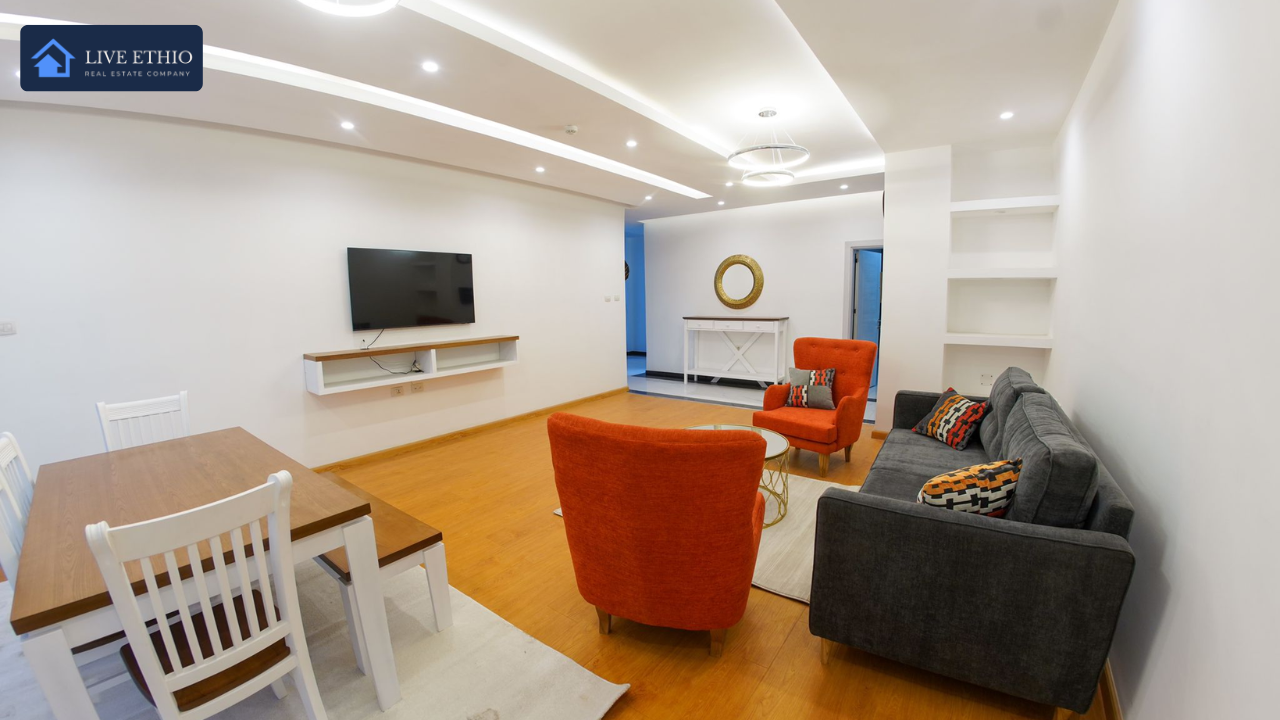
A Changing Rental Landscape
The rental market in Addis Ababa is evolving. What was once a market dominated by long-term, unfurnished residential leases is gradually shifting toward flexibility, convenience, and higher service standards. Furnished apartments particularly in prime districts are no longer niche offerings. They are becoming a core investment strategy for income-focused property owners. This transformation is driven by demographic shifts, international presence, and changing tenant expectations. As the city continues to function as a diplomatic, commercial, and development hub, a growing segment of tenants prefers fully equipped homes that allow immediate move-in without logistical delays. However, the critical question for investors remains: does furnishing a property meaningfully improve profitability, or does it simply increase operational complexity? To answer that, we must look beyond surface-level rental premiums and examine the financial structure, risk profile, tenant demand, and long-term sustainability of this model.
Why Demand for Furnished Apartments Is Growing
The demand for furnished apartments in Addis Ababa is closely linked to mobility. A significant portion of high-paying tenants in the city are not permanent residents. They are professionals on fixed-term contracts, consultants working on development projects, diplomatic staff, or diaspora members spending limited periods in Ethiopia. These tenants prioritize convenience over customization. They prefer properties that eliminate the need to purchase furniture, appliances, and household essentials. In areas such as Bole and Kazanchis, this expectation has become standard in the upper rental segment.
Several structural factors are contributing to this trend:
- Continued presence of international NGOs and embassies
- Corporate housing allowances for executives
- Increasing short-to-mid term work assignments
- Diaspora investors requiring temporary accommodation
- Lifestyle preference for move-in-ready housing
This demand creates an opportunity for investors but only when properties meet professional standards.
The Financial Case: Higher Rent, But Higher Responsibility
The primary attraction of furnished apartments is the rental premium. In many prime areas of Addis Ababa, a well-designed furnished unit can command 20% to 40% more monthly rent than an unfurnished equivalent.
This higher rental rate can significantly improve gross yield. However, focusing only on rent creates a misleading picture. Investors must analyze both income and cost structures. Furnishing a property requires substantial upfront capital allocation. High-quality furniture, appliances, décor, and electronics must align with tenant expectations. In premium neighborhoods, substandard furnishing can damage both occupancy rates and rental value.
Beyond setup costs, ongoing expenses include maintenance, repairs, replacements, and occasional refurbishments. Furniture depreciates faster than structural property elements. Sofas wear out, appliances malfunction, and interior design trends change.
Operational differences between furnished and unfurnished models typically include:
- Higher initial capital investment
- Increased maintenance frequency
- Faster wear and tear
- Greater tenant turnover
- Potentially higher vacancy risk if standards decline
Therefore, the true performance indicator is net yield not gross rental income.
Location Sensitivity: Not Every Area Supports the Model
The success of a furnished investment is highly location-dependent. While the model performs strongly in prime districts, it may underperform in purely residential family-oriented zones. In Bole, demand for furnished units is supported by proximity to the airport, international schools, business centers, and lifestyle amenities. Here, the furnished model aligns perfectly with tenant expectations. Similarly, Kazanchis benefits from its role as a business hub. Professionals working in nearby offices often seek smaller, executive-style apartments that are ready for immediate occupancy. In contrast, areas such as CMC primarily attract long-term family tenants. In these neighborhoods, unfurnished units often produce more stable tenancy and reduced management complexity. This highlights a crucial principle: furnishing does not create demand it must respond to existing demand.
Tenant Expectations and Management Implications
Furnished apartments attract a different type of tenant. These tenants often have higher income levels and structured housing allowances, but they also maintain higher expectations.
They typically expect:
- Immediate maintenance response
- High-quality interior standards
- Reliable utilities and backup systems
- Clean, professionally managed environments
As a result, the furnished model works best when paired with organized property management. Investors who lack time or operational capacity may find the demands overwhelming. The management difference is not minor. It includes regular inspections, rapid maintenance coordination, periodic upgrades, and structured tenant communication. Without these systems, the rental premium may not justify the added complexity.
Risk Considerations in a Changing Market
While furnished apartments can outperform in strong economic conditions, they are also more sensitive to market shifts. If expat presence decreases or corporate housing budgets tighten, demand for premium furnished units may slow faster than demand for affordable unfurnished housing.
Additional risks include:
- Oversupply in prime districts
- Increased competition among newly built apartments
- Currency fluctuations affecting rental pricing
- Vacancy periods during transitional market cycles
This does not make the model unstable but it does require active monitoring and strategic positioning.
Long-Term Outlook: Sustainable or Temporary Trend?
Addis Ababa’s role as a diplomatic and development hub suggests that demand for furnished housing will remain structurally supported. As long as embassies, international institutions, and corporate entities operate within the city, there will be a need for flexible, move-in-ready accommodation.
Furthermore, lifestyle preferences are evolving. Younger professionals increasingly value convenience over ownership of furniture. This cultural shift supports the furnished rental model. However, sustainability depends on maintaining quality. Furnished apartments that are poorly maintained or minimally equipped will struggle in a competitive environment. Professional execution is what transforms a furnished unit from a simple rental property into a premium income asset.
Strategic Conclusion: Is It Worth the Investment?
Furnished apartments in Addis Ababa can significantly enhance rental income and gross yield particularly in prime areas with strong expat presence.
They are most suitable for investors who:
- Seek higher monthly cash flow
- Can allocate upfront furnishing capital
- Have access to professional management
- Invest in prime or business-oriented districts
- Understand tenant expectations
They may be less suitable for investors who prioritize simplicity, low involvement, and long-term family tenancy.Ultimately, the decision should be driven by financial modeling rather than market hype. Furnishing a property is not automatically profitable. It becomes profitable when aligned with location, tenant profile, and management capability. In the right conditions, a furnished apartment is not just a rental it is a strategic income multiplier.