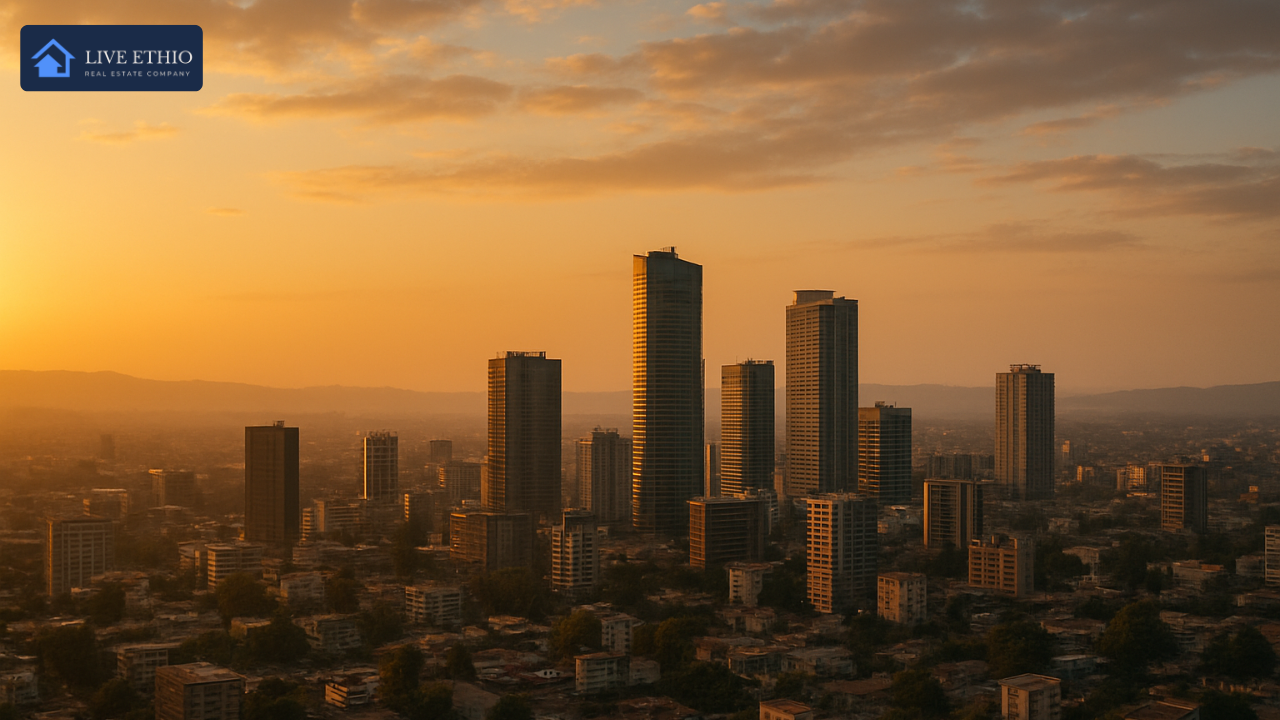
When Emperor Menelik II founded Addis Ababa in 1886, the city was little more than his royal camp at Entoto, a palace, a few churches, and scattered homes of chiefs and nobles. Nearly 140 years later, Addis Ababa which means “New Flower” in Amharic has blossomed into a bustling metropolis. What was once a modest settlement is now dominated by high-rises, residential complexes, and widespread real estate development.
In this article, we’ll explore how the real estate industry in Addis Ababa has evolved, its size and profitability, and the unique opportunities it offers for entrepreneurs and investors ready to make their mark.
1. The Evolution of Real Estate in Addis Ababa
Addis Ababa is not just Ethiopia’s capital it is often called Africa’s diplomatic capital. The city is home to the African Union (AU), the United Nations Economic Commission for Africa (UNECA), and more than 130 foreign embassies, one of the highest numbers in the world after Washington D.C. and Brussels.
This unique diplomatic status is no coincidence. Addis Ababa was chosen as the seat of the AU and UNECA because of Ethiopia’s long history of independence (it was never colonized), its strategic central location on the continent, and its reputation for political stability compared to other African capitals. This has made Addis Ababa a global meeting point for conferences, peace negotiations, and international cooperation.
Over the last two decades, this reputation combined with Ethiopia’s rapid economic growth has fueled an unprecedented construction boom. Residential apartments, office towers, commercial buildings, shopping malls, and luxury hotels are rapidly reshaping the city’s skyline.
This transformation is driven by:-
- Rapid population growth: Addis Ababa’s population exceeds 5 million and continues to grow.
- Rural-to-urban migration: Thousands move to the capital each year seeking education, work, and better living conditions.
- A rising middle class: Demand for modern housing, shopping centers, and entertainment venues is stronger than ever.
As a result, neighborhoods like Bole, Kazanchis, Bisrate Gebriel, and Megenagna have become real estate hot spots, attracting both local buyers and international investors who want to be close to the city’s business and diplomatic hubs.
2. How Big Is the Real Estate Market?
Ethiopia’s real estate and construction sector is one of the country’s biggest economic engines, contributing about 12.5% of GDP and employing thousands of people. Urbanization continues to rise, with Addis Ababa welcoming new residents from all over the country every year. This rapid growth has created massive demand for housing, far outpacing supply and that is exactly where the opportunity lies for investors, developers, and entrepreneurs. The data below shows both the scale of the challenge and the potential rewards for those ready to enter the market:

3. Is Real Estate Profitable in Ethiopia?
Real estate in Ethiopia has consistently shown strong returns not just because people need housing, but because property prices and rents are steadily rising. Based on an article published by The African Investor, property prices in prime areas like Bole, Old Airport, and Kazanchis are currently between $1200 - $1700 per square meter while emerging neighborhoods such as CMC, Summit, and Ayat are priced between $800 - $1100 per square meter and are experiencing faster growth
The same article notes that property prices in established districts have been growing 7–10% annually, while emerging areas have seen 15–25% growth over the past two years. Rental yields remain attractive averaging 10–12% across the city with high-demand areas like Bole and Kazanchis offering 5–8% yields, and emerging neighborhoods often reaching 8–12%.
This combination of steady price appreciation and strong rental returns makes real estate one of Ethiopia’s most attractive investment sectors, particularly for entrepreneurs who want to benefit from the city’s rapid urbanization
4. Opportunities for Entrepreneurs in Ethiopia’s Real Estate Industry
The future of real estate in Addis Ababa is not limited to developers building large apartment complexes. Entrepreneurs can find opportunities in several related areas, including:-
- Real Estate Technology: PropTech startups offering online listings, virtual tours, and digital transaction management are still in their early stages in Ethiopia.
- Interior Design & Furnishing: As demand for furnished apartments grows, businesses offering affordable, stylish interiors have plenty of room to grow.
- Construction Services & Materials: Quality, sustainable building materials and skilled labor are in high demand.
For those considering investing or starting a business in the sector, exploring the current houses for sale in Addis Ababa can offer insight into pricing trends and popular locations.
Addis Ababa is no longer the quiet city founded by Emperor Menelik II it is a vibrant, modern metropolis with a thriving real estate market. For entrepreneurs, the opportunities are vast, from property development to technology and services that support this growing industry.
With the right approach, the future of real estate in Addis Ababa could be the perfect place to plant your next “new flower.”
Addis Ababa’s real estate market is evolving quickly, and those who act early will be best positioned to benefit. If you’re ready to explore opportunities whether buying, renting, or investing contact Live Ethio Real Estate today.
Reach us at +251-974-299-472 and let’s find your next investment or dream property in Addis Ababa.