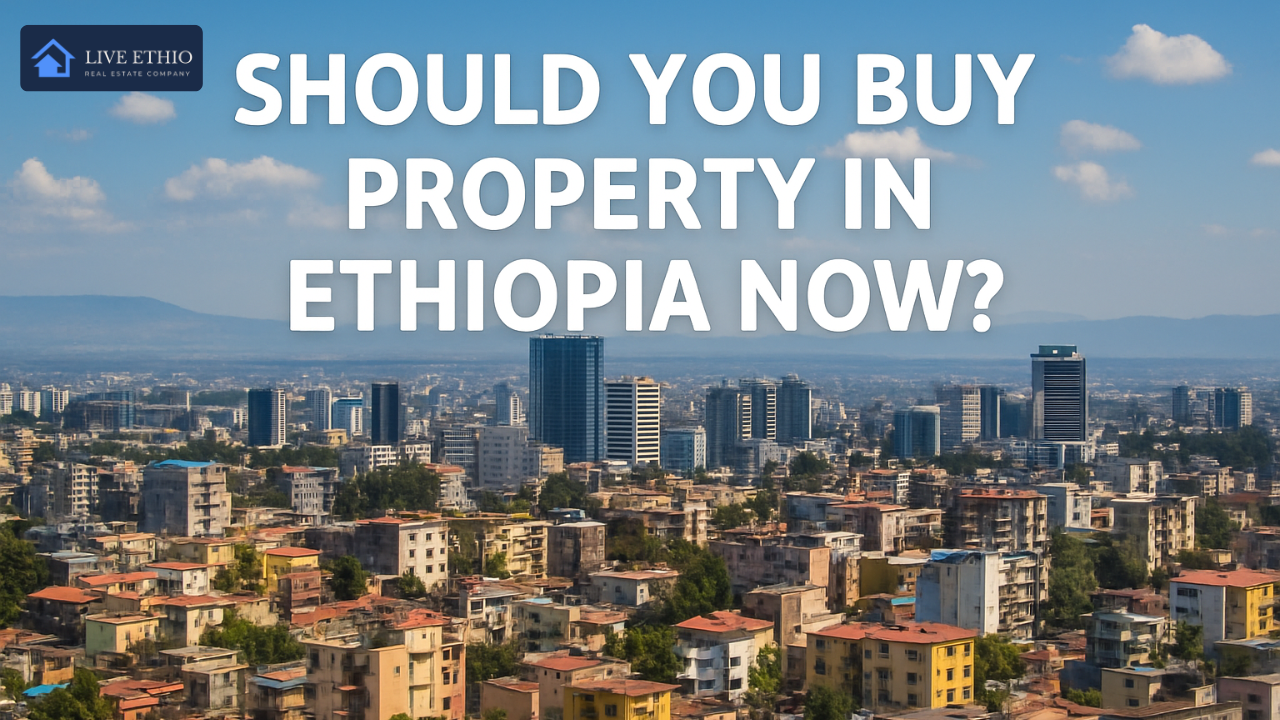
The Ethiopian real estate market has undergone major shifts in recent years, shaped by economic reforms, banking regulations, diaspora investment incentives, and the growing demand for both residential and commercial spaces. For many locals, returnees, and diaspora buyers, the question remains: Is now a good time to buy property in Ethiopia? To answer that, it’s important to look at the current market conditions, price trends, investment risks, and long-term opportunities. This blog provides a comprehensive overview to help you make an informed decision.
1. Property Prices Are Stabilizing After Years of Rapid Growth
Over the last decade, property prices in Addis Ababa climbed at an unprecedented rate. Neighborhoods like Bole, Kazanchis, CMC, Summit, and Megenagna saw significant appreciation due to demand from diaspora buyers, embassy staff, NGOs, and private investors. However, in the past two years, market activity has been influenced by changes in banking policy especially the limited access to real estate loans.
With fewer buyers able to rely on financing, developers and property owners have adjusted pricing expectations. Instead of sharp price increases every year, many areas are now experiencing price stabilization or slower growth. This creates a window of opportunity for buyers, especially those with access to foreign currency or immediate cash.
Diaspora incentives, such as priority access to condominiums, foreign currency accounts, and remittance-linked investment schemes, are also allowing buyers to take advantage of more flexible payment options. For cash buyers, this is one of the most favorable times in recent years to negotiate with developers or property owners.
2. The Need for Housing Continues to Grow
Even though certain segments of the market have cooled, demand for housing remains extremely high. Addis Ababa alone is estimated to have a shortage of more than 500,000 homes. Population growth, urban migration, and Ethiopia’s expanding young workforce all contribute to rising long-term demand.
Middle-income areas like CMC, Ayat, Summit, and Goro Yerer continue to attract families looking for more space, quieter neighborhoods, and easier access to schools and supermarkets. Meanwhile, high-end areas like Bole, Old Airport, and Kazanchis remain attractive for investors focused on rental income, especially for expatriates and organizational staff.
If you’re considering long-term investment, Ethiopia’s residential market still shows strong potential. Even if price increases slow down in the short term, demand ensures properties continue to hold value, and rental occupancy rates remain high in key areas.
3. Rental Income Remains Strong Especially in Prime Locations
One of Ethiopia’s biggest investment advantages is the rental market. Addis Ababa has a steady flow of diplomats, expats, NGO staff, business travelers, and diaspora families returning for extended stays. These groups typically look for modern, serviced apartments or furnished villas and they often pay in foreign currency.
Areas such as Bole, Kazanchis, Old Airport, Megenagna, and Bisrate Gebriel consistently offer the best returns. Depending on the type of property, rental yields can range from 6% to 12% annually, particularly for furnished apartments and luxury homes.
Short-term rentals like Airbnb are also growing in popularity, especially near the airport, in central business districts, and around entertainment hubs. For investors seeking passive income, 2025 remains one of the best years to enter the rental market, as demand far exceeds supply for quality furnished units.
4. Diaspora Investment Policies Are Improving
The Ethiopian government has made significant efforts to attract diaspora investment, particularly in real estate. Some of the benefits now available include:
- Diaspora accounts allowing deposits in USD, EUR, and GBP
- Access to priority housing schemes
- Special rates for remittance-backed construction loans
- Investment incentives in industrial and residential development
These policies are meant to encourage foreign currency inflow and support local development. When combined with stabilizing property prices, these incentives create a favorable environment for diaspora buyers who want to invest in homes, apartments, or commercial buildings.
If you are a diaspora planning to return, retire, or build a rental portfolio in Ethiopia, current conditions are more supportive and predictable compared to previous years.
5. Construction Costs Are High But Buying Ready Properties Can Save Money
The cost of building materials has remained high due to inflation, import challenges, and global price fluctuations. Cement, steel, finishing materials, electrical wiring, and plumbing fixtures have all become more expensive. As a result, many developers have slowed down new construction or postponed launching new projects.
This has two major implications:
- Buying ready homes is more cost-effective than building from scratch, especially if you want immediate occupancy.
- Fewer new developments mean that existing quality properties become even more valuable.
If you’ve been considering whether to buy land and build or purchase a completed property, the current environment makes finished homes the more affordable and predictable option.
6. Risks to Consider Before Buying
While the market is promising, buyers should remain aware of several risks:
a) Title Deed Issues
Always verify title deeds, plot boundaries, and municipal approvals through trusted legal channels or real estate consultants.
b) Inflation and Construction Delays
Developers may face delays due to material shortages or cost increases. Choose reputable companies with completed projects and transparent contracts.
c) Policy Changes
Banking and land policies in Ethiopia can change. Buyers should stay informed through official sources, lawyers, or real estate professionals.
d) Overpriced Properties
Some sellers still expect pre-2023 price levels. Market research and negotiation are essential.
Despite these risks, the overall direction of the market remains positive for well-informed buyers.
7. So Should You Buy Property in Ethiopia Now?
For many buyers, the answer is yes — but with the right research and strategy.
You should consider buying now if:
- You have cash or access to foreign currency
- You want to invest in high-demand rental areas
- You are a diaspora investor looking to take advantage of favorable policies
- You want a home in a developed neighborhood with stable value
- You plan to hold the property long-term
You may want to wait if:
- You rely heavily on local financing
- You are hoping for major price drops (unlikely in high-demand areas)
- You are not ready to commit to legal due diligence
Overall, Ethiopia’s property market in 2025 remains one of the strongest investment paths for locals and diaspora alike. With stabilizing prices, strong rental returns, ongoing demand, and improving economic policies, buyers have a rare opportunity to enter the market with better leverage and more choice than in previous years.