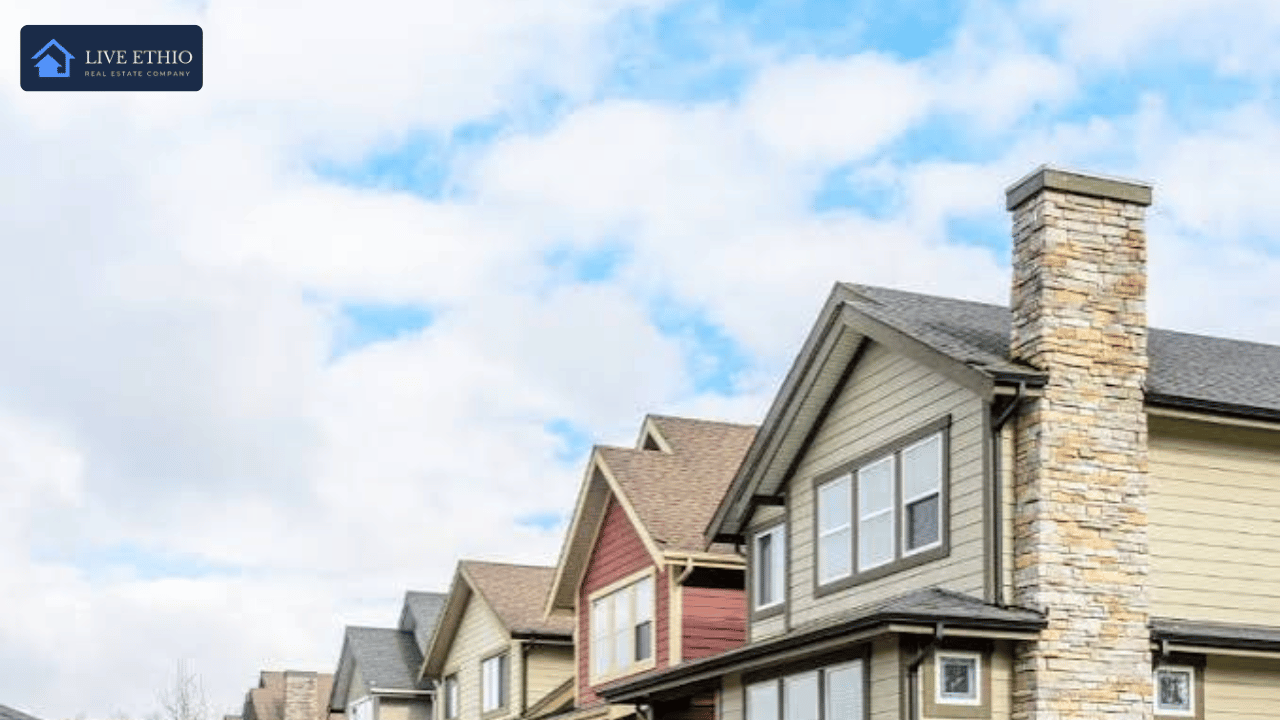
When buying a house in Addis Ababa, evaluating the neighborhood is just as important as evaluating the house itself. Safety, access to schools and essential services, road connectivity, infrastructure, and potential resale demand can all affect your quality of life and the long-term value of your property. A house can look attractive and still be a poor fit if it is difficult to access, far from schools or workplaces, located in an area with infrastructure challenges, or difficult to resell later. This is why buyers should look beyond the property's walls and carefully assess the surrounding neighborhood before making a decision. Whether you are buying a family home, an investment property, or a house that you may eventually resell, the following factors can help you evaluate a neighborhood in Addis Ababa more effectively.
Why Does the Neighborhood Matter When Buying a House?
A property is not isolated from its surroundings. The neighborhood affects how convenient it is to live in the house, how much demand there may be for similar properties, and how attractive the property may be to future buyers. For example, two houses with similar sizes and construction quality can have very different market appeal if one is close to schools, major roads, shopping areas, and workplaces while the other has limited access to essential services. Neighborhood characteristics can also change over time. New roads, commercial developments, schools, residential projects, and other infrastructure can affect how an area is perceived and how convenient it is to live there. This means buyers should evaluate both the current condition of the neighborhood and its potential future development.
1. How to Evaluate Neighborhood Safety in Addis Ababa
Safety is one of the first things many homebuyers consider, particularly families planning to live in the property for many years. However, safety cannot always be determined simply by looking at a neighborhood's reputation. Conditions can vary considerably between streets and even between properties in the same area.
Visit the Area at Different Times
One of the simplest ways to understand a neighborhood is to visit it more than once.
If possible, visit during:
- Morning hours
- Afternoon
- Evening
- Weekdays
- Weekends
Pay attention to how busy the streets are, how accessible the property feels after dark, the amount of activity in the surrounding area, and whether there are noticeable differences between daytime and nighttime conditions.
A neighborhood that feels quiet during a daytime property viewing may have a very different atmosphere in the evening.
Speak With People Who Live Nearby
Current residents can provide useful information that may not be obvious during a property viewing.
You can ask nearby residents or business owners about:
- General security concerns
- Street accessibility
- Noise levels
- Power or water interruptions
- Flooding or drainage problems
- Traffic during busy hours
- Common issues affecting residents
It is useful to speak with more than one person rather than relying on a single opinion.
Examine the Street and Surrounding Properties
Look at the physical environment around the house.
Check whether neighboring properties have secure gates and fences, whether streets are adequately accessible, and whether there is sufficient lighting. Also consider how isolated or populated the immediate area is. The condition of surrounding properties can also provide clues about the overall character and development of the neighborhood.
Consider the Exact Location, Not Just the District
Saying that a house is located in Bole, Yeka, CMC, or another well-known area does not tell you everything you need to know. A neighborhood can contain streets with very different conditions. One property may have excellent road access and nearby services, while another property within the same broader area may be much less convenient. Always evaluate the specific street and immediate surroundings of the property.
2. Evaluate Access to Schools
For families with children, proximity to good schools can be one of the most important neighborhood considerations. However, being close to a school is not necessarily enough. Buyers should consider the school's location, transportation requirements, quality, fees where applicable, and whether it meets the family's educational preferences.
Look at the Distance and Travel Time
Instead of only asking how many kilometers a school is from the property, consider the actual travel time. Traffic in Addis Ababa can significantly affect commuting times. A school that appears relatively close on a map may take considerably longer to reach during peak hours.
If possible, test the route during the time you would normally take your children to school.
Consider Multiple School Options
A neighborhood with several schools within reasonable reach can offer greater flexibility than an area with only one nearby option.
Depending on your family's needs, you may want to research:
- Private and public schools
- International or alternative education options
- School fees
- Transportation availability
- School schedules
- Admission requirements
- Distance from home
Parents should consider not only the schools currently nearby but also whether the neighborhood provides reasonable access to other educational options.
Think About Future Family Needs
If you are buying a house as a long-term family home, consider how your needs may change. A neighborhood that works well for a family with young children may have different advantages or disadvantages as children get older. Access to secondary schools, universities, extracurricular activities, and transportation may eventually become more important.
3. Evaluate Access to Work and Major Roads
Your daily commute can have a major effect on your experience of living in a neighborhood. Before buying, identify the places you regularly need to reach, such as your workplace, schools, family members' homes, hospitals, shopping areas, and places of worship or recreation. Then consider the property's access to major roads and transportation options.
Don't Judge Distance by Map Alone
Two properties may be the same distance from your workplace but have very different commuting times. Road conditions, congestion, intersections, public transportation, and accessibility during different times of day can all influence the actual journey. If possible, travel from the property to your main destinations during normal commuting hours before deciding to buy.
4. Evaluate Essential Services and Amenities
A convenient neighborhood should provide reasonable access to the services you use regularly.
Depending on your lifestyle, consider the distance to:
- Supermarkets and grocery stores
- Pharmacies
- Hospitals and clinics
- Banks and ATMs
- Restaurants and cafés
- Schools
- Public transportation
- Places of work
- Recreational spaces
You do not necessarily need every service within walking distance. What matters is whether the services you need can be reached conveniently from the property.
5. Evaluate Infrastructure and Utilities
Infrastructure can have a significant impact on the practicality of a property. Before buying, investigate the condition of the roads, drainage systems, water supply, electricity, telecommunications, and waste management around the property.
Roads and Accessibility
Ask yourself:
- Is the property accessible throughout the year?
- Is the road paved or unpaved?
- Can vehicles easily reach the house?
- Is parking available?
- Does the road become difficult to use during heavy rain?
These factors can affect both your daily life and the property's future appeal.
Water and Electricity
Ask the seller or nearby residents about the reliability of essential utilities.
Do not rely solely on what you observe during a single property visit. Ask whether interruptions are common and whether the property has alternative arrangements such as water storage or backup power.
Drainage and Flooding
Drainage is particularly important when evaluating a property. Look at the slope of the land, drainage channels, nearby roads, compound entrances, and signs of previous water damage. Ask residents whether the area experiences flooding or standing water during heavy rain.
These problems may not be obvious during a dry-season property viewing.
6. How to Evaluate Resale Value
Even if you intend to live in the house for many years, it is worth considering how easy the property might be to sell in the future. Resale value is influenced by multiple factors, and there is no guarantee that a property will appreciate in value. However, certain characteristics can make a house more attractive to a wider range of future buyers.
Location and Accessibility
Properties in convenient locations may have a broader pool of potential buyers because accessibility is important to many households.
Consider proximity to:
- Major roads
- Business districts
- Schools
- Healthcare
- Shopping areas
- Transportation
- Established residential areas
A property that is convenient for several types of buyers may have a larger potential market when you eventually decide to sell.
Property Size and Layout
The size and functionality of the house can also affect demand. A well-designed home with practical bedrooms, bathrooms, kitchen space, parking, outdoor space, and storage may appeal to more buyers than a property with an inefficient layout. Think beyond the number of rooms. Consider whether the space works for everyday living.
Condition and Construction Quality
A property that requires extensive repairs may be less attractive to future buyers.
When comparing houses, pay attention to the quality and condition of:
- Roofing
- Flooring
- Plumbing
- Electrical systems
- Doors and windows
- Walls and ceilings
- Kitchen and bathrooms
- Compound walls and gates
Keeping the property properly maintained can help preserve its appeal over time.
Legal Documentation
Property documentation is another important consideration. Buyers should have the property's ownership and legal documents carefully reviewed by qualified professionals before completing a transaction. A house with unresolved ownership questions, documentation issues, or other legal complications may be more difficult to transfer or sell later.
7. Look at the Neighborhood's Development Potential
Current conditions are important, but buyers should also consider how the surrounding area may develop.
Look for signs of:
- New residential construction
- Road improvements
- New commercial developments
- Schools and healthcare facilities
- Improved transportation access
- Increasing demand for housing
At the same time, development does not automatically mean that property values will increase. New construction can also bring more traffic, congestion, noise, or pressure on existing infrastructure. The goal is to understand what changes may affect the neighborhood rather than assuming that every development will benefit property owners.
8. Compare Similar Properties in the Same Area
One of the best ways to evaluate whether a house makes sense financially is to compare it with similar properties.
Look at houses with comparable:
- Location
- Land size
- Building size
- Number of bedrooms
- Construction quality
- Property condition
- Access to roads
- Legal status
Do not compare a house in one neighborhood directly with a completely different property in another area and assume the price difference represents value. The most useful comparisons are usually between properties that are genuinely similar.
9. Don't Confuse Asking Price With Market Value
An asking price is the amount a seller wants for the property. It does not necessarily mean that the property is worth that amount in the market. When evaluating a house, consider the property's characteristics alongside comparable listings and, where possible, recent transaction information. You should also account for potential renovation costs. For example, a house with a lower asking price may require significant repairs, while a more expensive property may be in substantially better condition. The purchase price alone does not provide the complete financial picture.
Questions to Ask Before Buying a House in Addis Ababa
Before committing to a property, ask the seller or agent questions such as:
How long has the property been on the market?
A long marketing period does not automatically mean there is a problem, but it can be useful information when combined with other factors.
Why is the owner selling?
The answer may provide useful context, although buyers should independently verify important claims.
Are there any known problems with the property?
Ask about structural issues, water problems, electrical problems, drainage, or major repairs.
What are the utility conditions in the area?
Ask specifically about water and electricity reliability rather than simply whether they are connected.
How accessible is the property during heavy rain?
This can help identify drainage and road-access issues that may not be visible during a normal viewing.
What schools and services are nearby?
Research these independently and, where possible, visit them.
What documents are available for the property?
Have the relevant documents reviewed by qualified legal professionals before making a commitment.
Should You Choose the Neighborhood or the House First?
Ideally, buyers should evaluate both at the same time. Starting with a neighborhood can help narrow your search. For example, a buyer may decide that proximity to schools and a workplace is more important than having a very large compound. Starting with a specific house, however, can also introduce you to neighborhoods you had not previously considered. The key is not to become so focused on the house itself that you overlook the surrounding area. A beautiful house in an inconvenient location may not provide the same long-term value or quality of life as a slightly less impressive house in a neighborhood that better fits your needs.
Final Thoughts
When buying a house in Addis Ababa, evaluating the neighborhood should be part of the property-buying process, not an afterthought. Safety, schools, road access, infrastructure, essential services, property condition, and potential resale demand all deserve careful consideration. There is no single neighborhood that is ideal for every buyer. The right choice depends on your budget, lifestyle, family needs, workplace, preferred property type, and long-term plans. Take time to visit the area, speak with people who live nearby, compare similar properties, inspect the house thoroughly, and verify the property's documentation before making a final decision. If you are currently looking for a house for sale in Addis Ababa, Live Ethio Real Estate Consulting can help you explore available properties based on your preferred neighborhood, budget, and requirements.
You can also read our guide on what is the nicest neighborhood in Addis Ababa to compare some of the city's commonly sought-after residential areas, or browse available houses for sale in Addis Ababa.