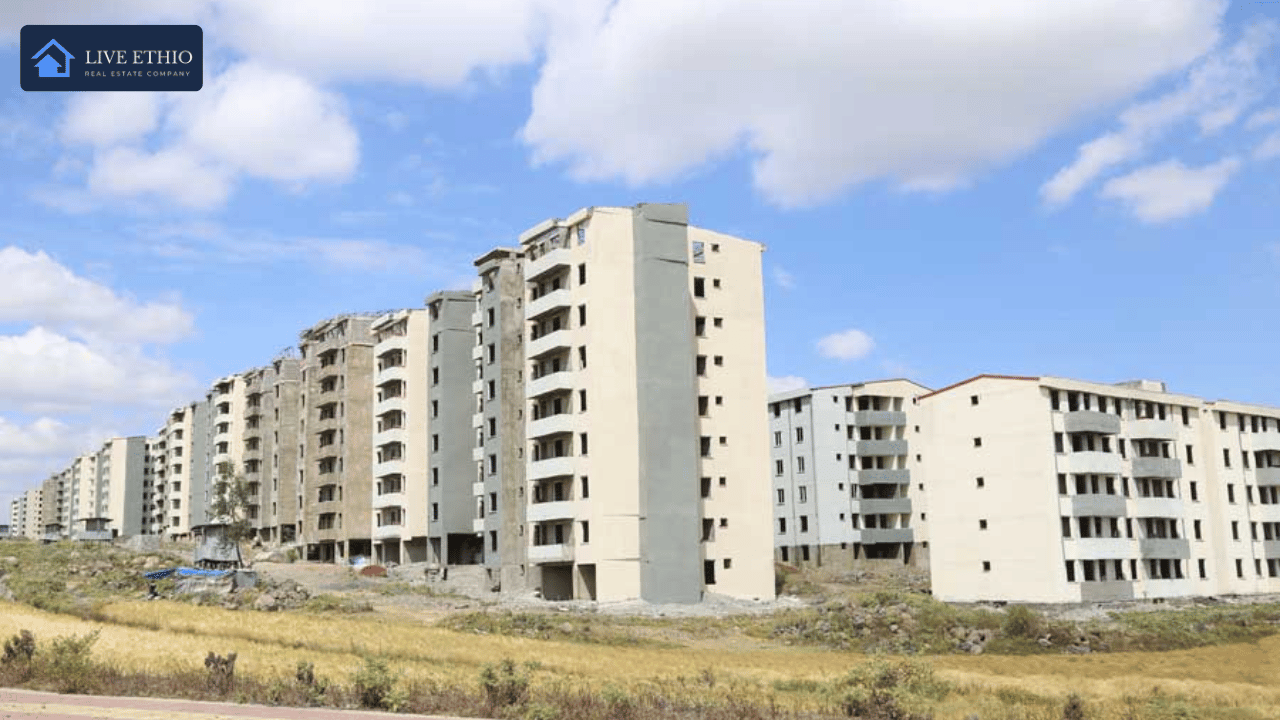
Buying a condominium in Addis Ababa is one of the most common ways for families and diaspora buyers to get a first foothold in the property market. It is also a process where small mistakes get expensive, because the paperwork matters as much as the apartment. This guide walks through what to check, what you will pay, and the order of the steps.
Step 1: Set a realistic budget
The asking price is not the whole cost. In addition to the price, plan for:
• Government taxes on transfer. Sources describe this as roughly 6% of the property value in total, made up of stamp duty and a transfer tax. They split it differently (one reports 2% stamp duty plus 4% transfer tax, another reports 6% stamp duty), so confirm the rate and who pays at the sub-city land office
• Agent commission. Around 2% of the sale price is commonly quoted. Agree in writing who pays it.
• Authentication and registration fees. These are the government fees for authenticating the sale contract and registering the transfer.
• Legal help. A lawyer who checks the documents is a small cost compared with the price of the flat.
A safe rule is to add roughly 7% to 10% on top of the agreed price for taxes and fees on a normal resale, and more if you use several professionals.
Step 2: Find the unit and verify the seller
View the condo in person, or have someone you trust view it. Then confirm that the person selling is the real owner:
1. Check the seller’s ID in person.
2. Ask for the ownership documents (title deed or the document that proves the holding).
3. Verify those documents at the relevant land registration office rather than relying on photocopies.
If an agent or relative is selling on the owner’s behalf, ask to see a valid, notarized power of attorney.
Step 3: Check the documents
The documents you should see and confirm before paying anything include:
• The seller’s valid ID
• The title deed or ownership certificate for the exact unit
• Proof that there is no mortgage, lien or dispute on the property
• The building’s approval documents, if you are buying from a developer
• A power of attorney, if anyone is acting for the owner or for you
If you are a buyer living abroad, you can usually act through a notarized power of attorney that is authenticated (often through an Ethiopian embassy or consulate). Choose that person carefully.
Step 4: Sign the sale agreement
Write the contract clearly: the unit’s exact location and size, the agreed price, the payment schedule, the handover date, and what happens if one side backs out. Do not sign a vague agreement or one that leaves the payment terms open. The agreement is then authenticated through the federal document authentication and registration agency. An agreement that has not been authenticated gives you much weaker protection.
Step 5: Pay through the bank, not in cash
Use a formal bank transfer and keep every receipt. Cash payments for a property are a common source of disputes and are discouraged. Payment in stages (a deposit, then the balance on transfer) is normal, but tie the final payment to the actual transfer of the title.
Step 6: Transfer the title at the land office
After authentication, you and the seller (or your representatives) submit the agreement and supporting papers to the sub-city land office, pay the transfer taxes and fees, and the title is registered in your name. Land-related services in Addis Ababa have been suspended and partly reopened in the recent past, so check that the office is processing transfers at the moment you plan to buy (verify). Only consider the purchase complete when the title deed carries your name, not when you receive the keys.
Step 7: Take over the unit
After the transfer:
• Move utility accounts (electricity, water) into your name
• Confirm the building service charge arrangement with the condominium association
• Keep a file with the title, contract, receipts and tax payment proof
Can foreigners buy a condominium?
Under the current regulations, foreign nationals can only purchase property in Ethiopia if the investment meets the government’s minimum requirement of $150,000. Since condominiums are generally valued below this threshold, they may not qualify for purchase by foreign buyers.
Common mistakes to avoid
• Paying before checking ownership. Always verify the title first.
• Too good to be true” pre-sale offers. Buyers have lost money on projects that were never completed. Check that the developer holds the right permits and that the building actually exists.
• Skipping authentication. An unauthenticated contract is hard to defend.
• Paying in cash with no paper trail.
• Ignoring service charges and unpaid bills. Old debts on the unit can become your problem.