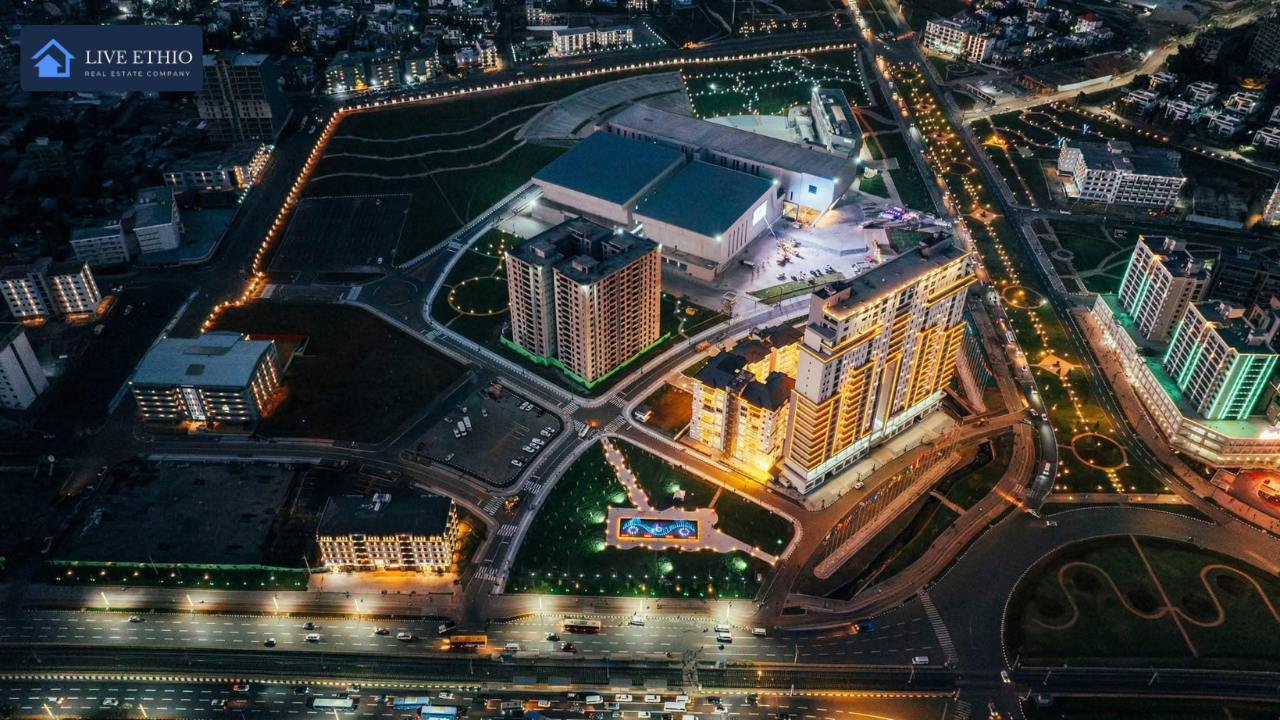
Infrastructure development plays a defining role in shaping property values in any growing city, and Addis Ababa is no exception. As Ethiopia’s capital continues to expand and modernize, investments in roads, transport systems, utilities, and public services are fundamentally altering how neighborhoods function and how real estate is valued.
For property buyers and investors, understanding the relationship between infrastructure and real estate is essential for making informed, long-term decisions.
At its core, infrastructure refers to the basic physical and organizational systems that support a city’s daily life and economic activity. In Addis Ababa, this includes road networks, public transportation projects, electricity and water supply, telecommunications, drainage systems, and social infrastructure such as schools, hospitals, and commercial centers.
When these elements improve or expand, they directly influence how accessible, livable, and attractive an area becomes all of which are key drivers of property value.
One of the most immediate ways infrastructure affects real estate is through accessibility. Road expansions, new transport corridors, and improved traffic flow reduce travel time between residential areas and employment hubs.
In Addis Ababa, neighborhoods that were once considered distant or inconvenient have seen increased interest following road upgrades or improved connectivity. As commuting becomes easier, demand for housing in these areas rises, leading to stronger price growth and rental demand. This dynamic is a major reason why Addis Ababa infrastructure development and property value are so closely linked.
Public transportation projects have a particularly strong impact on property markets. Improved bus routes, light rail accessibility, and transport hubs increase the appeal of surrounding areas for both residents and businesses. Properties located near reliable transport options often command higher rental rates because tenants value convenience and reduced transportation costs. Over time, this consistent demand supports both rental yields and capital appreciation, especially in a city where mobility has historically been a challenge.
Infrastructure also influences property value through commercial and economic activity. When utilities such as electricity, water, and internet services become more reliable, businesses are more likely to establish offices, retail spaces, and service centers nearby. This creates employment opportunities and increases foot traffic, which in turn boosts demand for residential housing. Mixed-use areas that benefit from strong infrastructure often evolve into high-demand zones, attracting both local buyers and long-term investors.
Another important but often overlooked factor is social infrastructure. The presence of quality schools, hospitals, shopping centers, and recreational facilities significantly affects how desirable a neighborhood is. In Addis Ababa, areas that host international schools, medical facilities, or major commercial developments tend to attract expatriates, NGO staff, and higher-income residents. This demand supports premium pricing and more stable rental income, reinforcing the value of investing in locations aligned with long-term urban planning.
Infrastructure development also plays a critical role in shaping future growth corridors. Investors who understand where the city is expanding rather than where it has already matured often gain an advantage. Early investment in areas slated for major infrastructure upgrades can result in significant appreciation once projects are completed. This is why experienced investors closely monitor government plans and private-sector developments when evaluating Addis Ababa property value trends.
However, infrastructure-led growth is not without risks. Construction timelines can be unpredictable, and some projects take longer than anticipated to deliver tangible benefits. Buying solely based on proposed developments, without considering current livability and demand, can expose investors to holding costs or slower returns. A balanced approach considers both existing infrastructure and realistically achievable improvements.
It is also important to recognize that infrastructure does not automatically increase value if other fundamentals are weak. Poor construction quality, lack of proper zoning, or limited market demand can limit upside even in well-connected areas. This highlights the importance of combining infrastructure analysis with broader due diligence, including property quality, developer reputation, and rental demand.
Overall, infrastructure development remains one of the most powerful forces shaping Addis Ababa’s real estate market. Areas that benefit from improved connectivity, reliable utilities, and strong social amenities consistently outperform those that do not. For buyers and investors willing to take a long-term view, understanding how and where infrastructure investments are unfolding can be the difference between average performance and sustained property value growth.