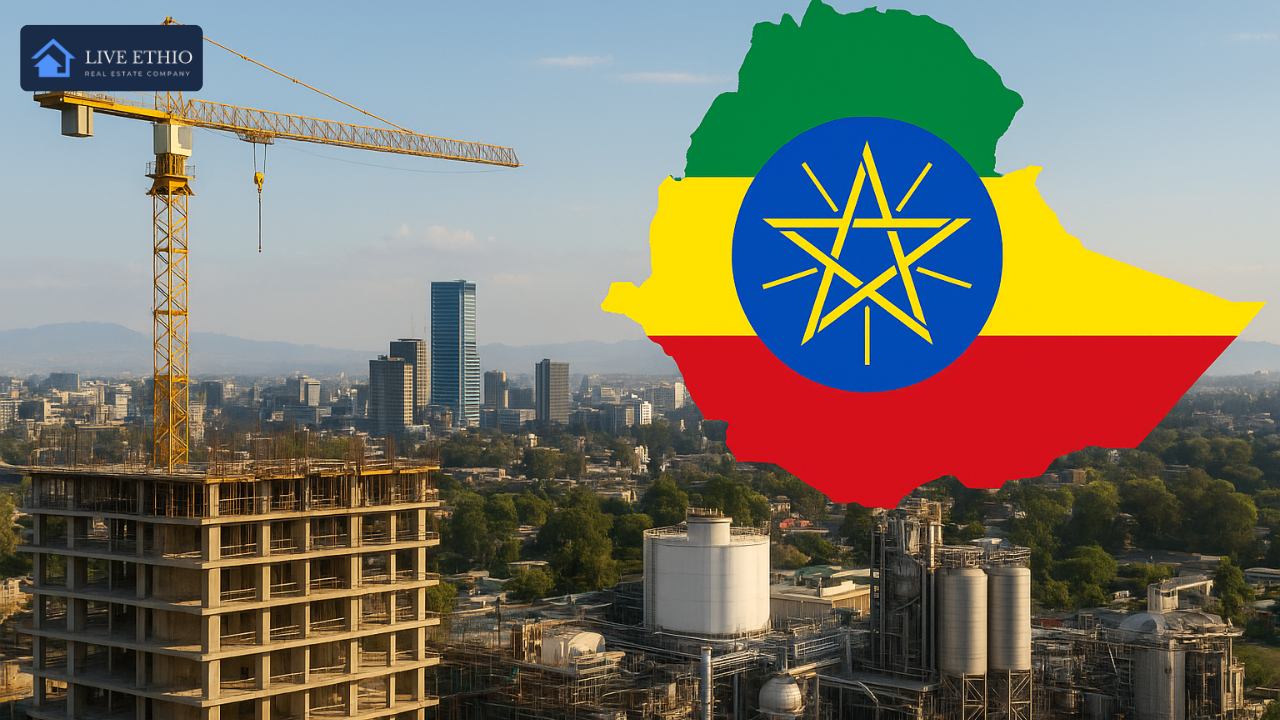
Ethiopia is entering a new phase of transformation one marked by economic stability, major infrastructure investments, and a renewed industrial push. The announcement of a $2.5 billion fertilizer plant in Gode, built in partnership with Nigeria’s Dangote Group, signals that the country’s growth strategy is expanding beyond energy and construction.
For diaspora and local investors, this is more than just good news it’s a roadmap for where opportunities will emerge next, from property demand to business investment.
1. Economic Forecast: Inflation, Growth & What It Means for Borrowers and Investors
After years of economic turbulence, Ethiopia’s outlook is improving. Inflation has begun to ease, providing breathing room for both lenders and borrowers. With more stable prices and stronger GDP growth, financial institutions can begin to lower lending rates — opening the door for more affordable mortgages and business loans.
For the Ethiopian diaspora, this shift is particularly important. Lower inflation means:
- More predictable exchange rates, reducing remittance losses.
- Greater loan accessibility for property or business investment.
- Improved returns as the housing market stabilizes.
Meanwhile, domestic borrowers can expect better terms on long-term loans as confidence in the banking system strengthens. The message is clear — this is the best time in years to consider buying property or investing in growth sectors.
💬 Related Insight:
Ethiopian banks are now offering home loans with as little as 10% down payment, making property ownership more accessible than ever.
👉 Read our latest guide: Updated Mortgage Loan Options in Ethiopia for Diaspora and Local Buyers
2. Infrastructure Ripple Effects of Large-Scale Industrial Projects
When Ethiopia builds big, the effects are rarely contained to one sector. Large-scale industrial projects have a ripple effect that spreads across transport, housing, energy, and commerce.
Take any major industrial hub from Hawassa Industrial Park to the new logistics routes along the Addis–Djibouti corridor and you’ll find booming housing demand, new businesses, and rising land values.
Here’s why:
- Infrastructure Expansion: New roads, power lines, and pipelines follow major investments, opening up previously underdeveloped areas.
- Population Growth: Industrial projects attract workers and professionals who need housing and amenities.
- Land Appreciation: As accessibility improves, property prices climb often before the public realizes what’s coming.
For real estate developers and diaspora investors, this pattern is a signal: the next property hotspots will form around Ethiopia’s new industrial zones.
3. Spotlight: The $2.5 Billion Fertilizer Plant in Gode
One of the most significant announcements this year is the $2.5 billion fertilizer plant to be built in Gode, southeastern Ethiopia. The project is a joint venture between Dangote Group (60%) and Ethiopian Investment Holdings (EIH) (40%), and it’s set to become one of the largest fertilizer plants in Africa.
Why It Matters
- Reduces Import Dependency
- Ethiopia currently spends over $1.5 billion annually on imported fertilizer. Producing it locally will not only save foreign currency but also stabilize domestic agricultural supply chains.
- Boosts Agricultural Productivity
- With consistent fertilizer availability, local farmers can increase yields and stabilize food prices supporting both urban and rural economies.
- Drives Regional Growth
- The project site in Gode will attract thousands of workers and supporting industries. Expect new housing, retail services, transport, and logistics operations to follow.
- Encourages Broader Investment
- The success of this plant will likely encourage similar ventures in natural gas processing, logistics, and energy infrastructure all of which create more demand for real estate.
- A Symbol of Ethiopia’s Industrial Era
- The fertilizer plant joins the ranks of other mega-projects such as the GERD, new industrial parks, and logistics corridors all pointing toward Ethiopia’s long-term industrial vision.
4. What This Means for Real Estate & Investment Opportunities
This convergence economic stability, infrastructure growth, and industrial expansion is laying the groundwork for Ethiopia’s next investment boom.
Here’s how:
- Rising Housing Demand: Industrial zones and regional cities will need residential units for workers, executives, and service providers.
- Commercial Property Growth: Logistics hubs, storage facilities, and retail spaces will see new demand.
- Land Value Increase: Areas surrounding Gode, Dire Dawa, Hawassa, and Bishoftu are expected to experience appreciation as infrastructure expands.
- Diaspora Advantage: With access to hard currency and early awareness, diaspora investors can secure high-potential properties before values surge.
In short, Ethiopia’s industrial progress is reshaping the country’s real estate map. Those who understand where infrastructure and industry intersect will find the highest returns.
5. Why Now Is the Right Time to Act
The combination of lower inflation, government-led industrialization, and rising investor confidence has created a rare window of opportunity. Waiting could mean missing the most affordable stage of this growth cycle.
If you’ve been considering purchasing a home, expanding your property portfolio, or exploring diaspora investment in Ethiopia now is the time
Every large-scale development today plants the seeds for tomorrow’s property value.
Next Step for Investors
As economic growth strengthens and industrial projects expand, now is the time to explore Ethiopia’s new mortgage and financing opportunities.
👉 Updated: Mortgage Loan Options in Ethiopia for Diaspora and Local Buyers
Learn how to get a home loan with only 10% down, compare interest rates, and see which banks are supporting both local and diaspora buyers.