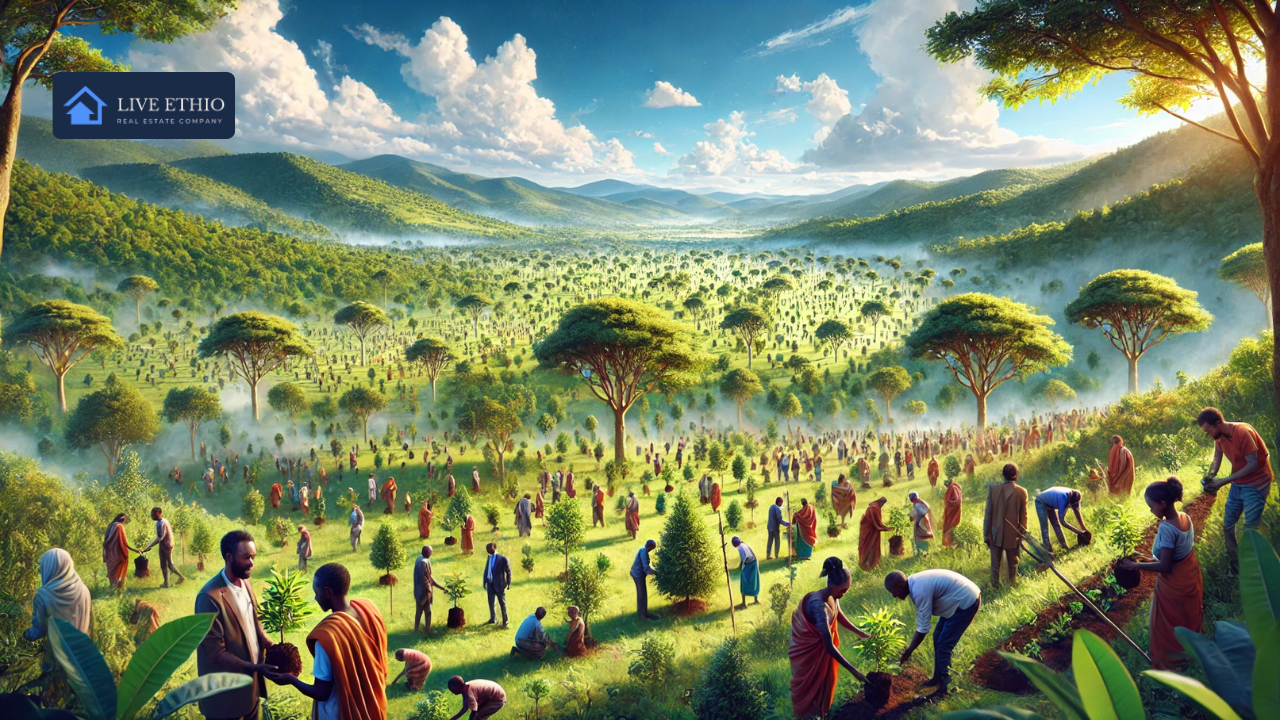
Ethiopia’s landscape is changing not only through urban growth and infrastructure but through the green transformation that’s reshaping the country’s future. What began as a national environmental initiative has now become a global symbol of climate action. The Green Legacy Initiative, launched by Prime Minister Abiy Ahmed in 2019, has mobilized millions of citizens to plant billions of trees, transforming both the land and the mindset of the nation.
As Ethiopia prepares for the next phase the Green Legacy 2025 the campaign’s vision is clearer than ever: to create a sustainable environment that supports both people and the planet.
This green revolution isn’t just about planting trees; it’s about restoring ecosystems, improving livelihoods, and shaping a future where development and sustainability go hand in hand.
What Is the Green Legacy Initiative in Ethiopia?
The Green Legacy Initiative was born out of a simple yet powerful idea that a single act of planting a tree can contribute to solving global environmental challenges. The program aims to combat deforestation, soil erosion, and the effects of climate change while promoting a culture of environmental responsibility.
Since its launch, Ethiopia has planted over 32 billion seedlings across the country, setting a world record in tree-planting participation. Each rainy season brings new waves of planting activities, involving government agencies, schools, NGOs, and local communities.
But beyond the numbers, the Green Legacy Initiative represents a shift in national consciousness. It has turned environmental care into a shared value one that unites Ethiopians across generations and backgrounds.
The Theme of Green Legacy Ethiopia 2025
The theme for Green Legacy 2025 focuses on “Greening Ethiopia for Generations.” It emphasizes sustainability and long-term impact rather than short-term achievement. While the earlier phases prioritized mass planting, the new phase highlights seedling survival, biodiversity restoration, and climate resilience.
The campaign now includes planting indigenous species, restoring watersheds, and protecting forest ecosystems that are vital to Ethiopia’s water supply and agriculture. Efforts are also being made to integrate modern technology such as satellite monitoring and mobile data tracking to ensure planted seedlings survive and thrive.
This strategic focus marks a turning point, moving Ethiopia from quantity to quality in its environmental efforts. It aligns perfectly with the nation’s broader vision of becoming a climate-resilient green economy by 2030.
Why the Green Legacy Matters
The importance of the Green Legacy goes far beyond environmental protection. It touches nearly every aspect of Ethiopia’s social and economic life.
For farmers, tree planting helps reduce soil erosion and improve productivity. For urban residents, it means cleaner air and cooler temperatures. For wildlife, it means restored habitats. And for the next generation, it means inheriting a land that is livable, fertile, and sustainable.
On a larger scale, the initiative strengthens Ethiopia’s reputation as a leader in climate action. In a time when global warming poses an existential threat, Ethiopia’s proactive approach sets an example for other nations particularly in Africa to follow.
Ethiopia’s efforts have even earned international recognition, with global organizations like the UN Environment Programme and World Economic Forum highlighting the initiative’s success as a model for community-driven sustainability.
Environmental Leadership and Economic Opportunities
What’s often overlooked is how environmental sustainability can drive economic opportunity. The growth of the Green Legacy Initiative has spurred new industries from eco-tourism to green construction that align environmental care with business innovation.
In cities like Addis Ababa, developers are beginning to embrace eco-friendly building designs that use natural light, energy-efficient materials, and green spaces. This not only supports the environment but also enhances property value and attracts investors who prioritize sustainability.
At Live Ethio, we see how the real estate sector is gradually adopting these green principles. Sustainable housing projects are gaining attention among buyers and diaspora investors seeking properties that blend comfort with environmental responsibility.
You can explore more on how real estate trends are evolving in our article on Updated Mortgage Loan Options in Ethiopia for Diaspora and Local Buyers
Link Between Tourism and the Green Legacy
Interestingly, Ethiopia’s environmental efforts have also strengthened its tourism industry. Lush green areas, forest reserves, and eco-friendly lodges have become attractions in themselves. Tourists visiting Ethiopia not only explore its cultural and historical sites but also participate in green activities, such as tree planting and conservation volunteering.
As the country’s natural beauty flourishes, so does its reputation as an eco-tourism destination one that combines adventure, sustainability, and purpose.
The Role of Communities and the Diaspora
The Green Legacy Initiative thrives because of community participation. Each year, millions of Ethiopians from all regions take part in mass tree-planting days, proving that sustainability isn’t just a government project — it’s a national movement.
The Ethiopian diaspora has also joined the cause by funding reforestation projects, supporting environmental NGOs, and investing in sustainable agriculture and eco-friendly housing. These contributions demonstrate how Ethiopians abroad continue to play a vital role in shaping the country’s development from afar.
If you’re part of the diaspora interested in contributing to Ethiopia’s growth, you might also find our guide on How to Open a Diaspora Account in Ethiopia
helpful for starting your investment journey.
Challenges and the Road Ahead
While the progress is remarkable, challenges remain. Ensuring seedling survival is one of the biggest issues. Studies show that only about 60–70% of planted seedlings reach maturity, largely due to water shortages, grazing, and inadequate follow-up.
To address this, Ethiopia is focusing on community-based forest management, training locals to monitor tree growth and protect forests year-round. Education programs are also being launched in schools to teach students the long-term value of sustainability.
Technology is becoming a crucial tool in this process. Mobile apps and drones are being used to map reforested areas, monitor soil health, and track seedling survival rates. This blend of traditional knowledge and modern innovation could ensure the campaign’s success for generations to come.
A Green Vision for the Future
As the Green Legacy 2025 campaign unfolds, Ethiopia stands as a beacon of hope for sustainable development. Its vision extends beyond reforestation it’s about creating a balance between economic progress and environmental responsibility.
A greener Ethiopia means healthier communities, more resilient agriculture, and sustainable urban growth. It also means increased potential for eco-tourism, renewable energy, and environmentally conscious real estate sectors that promise both profit and purpose.
The Green Legacy reminds us that the seeds we plant today literally and figuratively shape the Ethiopia we leave for tomorrow.