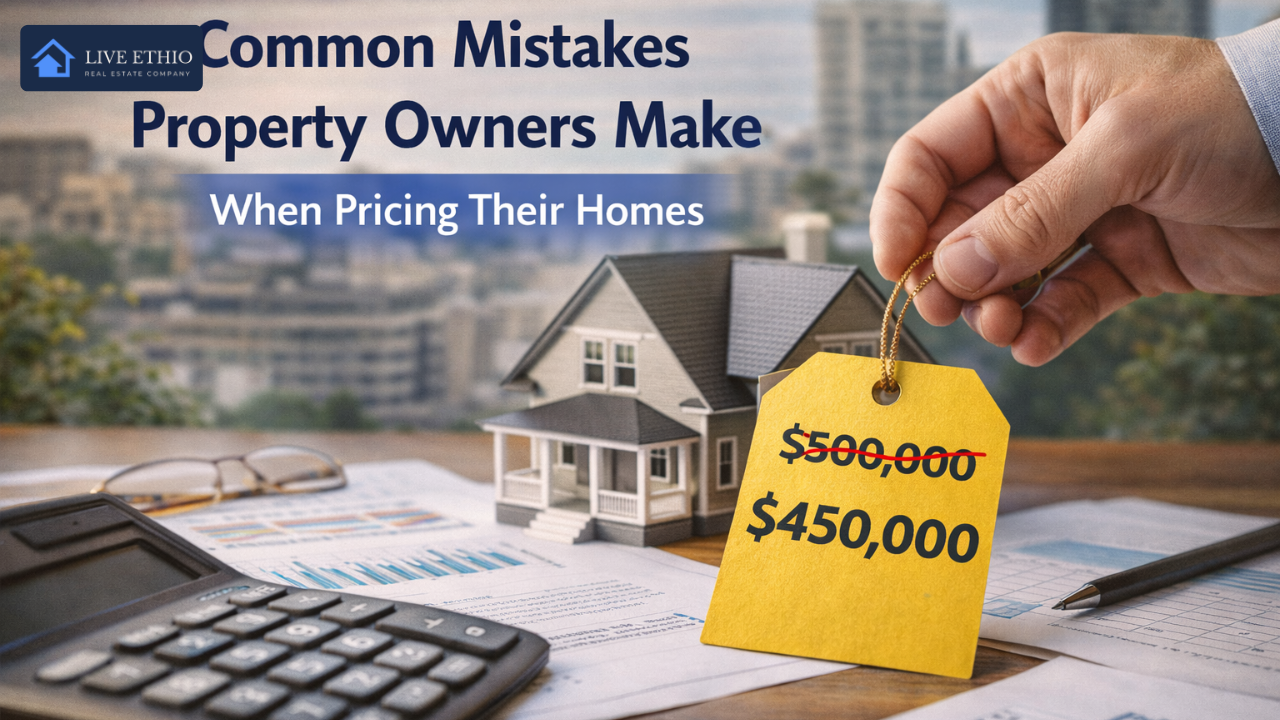
Pricing a property correctly is one of the most important steps in selling or renting successfully, yet it’s also one of the most misunderstood. Many property owners in Addis Ababa either overestimate or underestimate their property’s value, which can lead to long vacancy periods, missed opportunities, or financial losses. Setting the right price is both an art and a science it requires market knowledge, objectivity, and strategy. In this article, we explore the most common pricing mistakes and how to avoid them.
Letting Emotions Drive the Price
One of the biggest mistakes property owners make is allowing emotional attachment to influence pricing. A home often carries memories, effort, and personal value, but buyers and renters are focused on market value, not sentiment. Overpricing based on personal attachment can push serious prospects away, causing your listing to sit longer than necessary. The longer a property stays on the market, the more buyers may assume something is wrong with it, making it even harder to sell or rent later.
Ignoring Market Data
Another common error is failing to research current market conditions. Property values fluctuate based on location, demand, infrastructure development, and economic trends. Pricing your home based on outdated information or hearsay can lead to unrealistic expectations. Instead, property owners should study recent transactions of similar properties in their area, considering size, condition, amenities, and neighborhood. This market-based approach helps ensure your price aligns with what buyers or tenants are actually willing to pay.
Pricing Too High “Just to Negotiate”
Some owners intentionally set a high price, assuming they can negotiate later. While negotiation is common, starting too high can significantly reduce inquiries. Many buyers and tenants filter listings by budget, meaning your property may never even appear in their search results if it’s overpriced. A realistic initial price generates more interest, stronger competition, and often leads to better final offers.
Pricing Too Low and Leaving Money on the Table
On the opposite end, underpricing a property can also be costly. Some owners price low to attract quick interest, but this can result in losing potential income or undervaluing the property. While competitive pricing is important, it should still reflect the true market value and unique strengths of your property. A well-balanced price attracts attention without sacrificing your financial return.
Failing to Adjust the Price When Needed
Markets change, and so does buyer behavior. If your property has been on the market for an extended period without serious inquiries, it may be a sign that the price needs adjustment. Holding onto an unrealistic price out of pride or hope can lead to prolonged vacancies and financial strain. Smart property owners monitor market feedback and remain flexible, adjusting the price when necessary to stay competitive.
Not Considering the Property’s Condition and Features
Pricing should reflect not only location but also the condition, layout, and features of the property. A well-maintained home with modern finishes, reliable utilities, and good accessibility can command a higher price than a similar property in poor condition. Ignoring these factors can result in mispricing, either overestimating or underestimating the property’s true worth.
Correct pricing is the foundation of a successful sale or rental. By avoiding emotional pricing, relying on current market data, setting realistic expectations, and remaining flexible, property owners can attract serious buyers or tenants and achieve better outcomes. In Addis Ababa’s dynamic property market, strategic pricing isn’t just important it’s essential for maximizing value and minimizing stress.