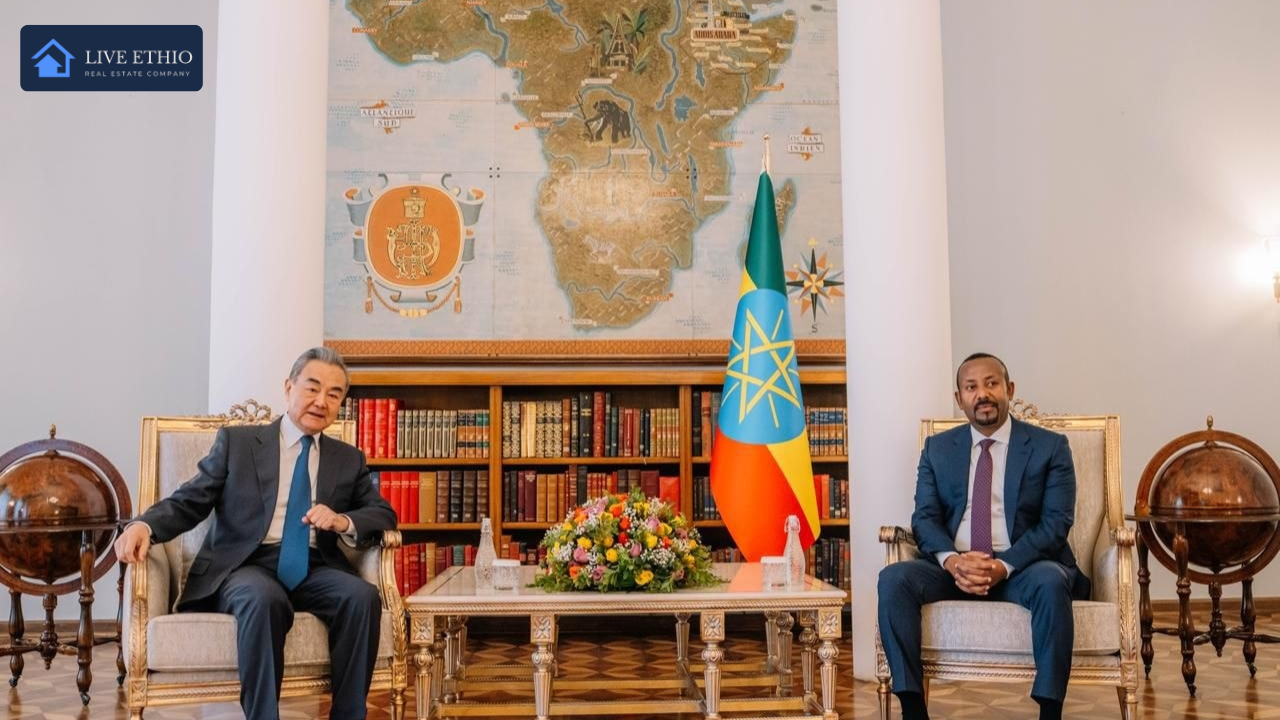
In early January 2026, Ethiopia took center stage in a major diplomatic engagement when China’s Foreign Minister, Wang Yi, visited Addis Ababa as part of his annual New Year tour of Africa. This high-level visit represented more than ceremonial protocol: it highlighted a deepening partnership between Ethiopia and China that goes far beyond traditional development assistance. For Ethiopia, this relationship is both pragmatic and strategic, reflecting a shared vision centered on economic growth, infrastructure development, and enhanced global integration.
A Strategic Partnership in Context
China and Ethiopia have maintained diplomatic ties since the 1970s, but over the past two decades, this partnership has grown into one of the most consequential relationships in Africa. From major transport corridors to industrial parks and urban development projects, Chinese investment and expertise have played an instrumental role in shaping Ethiopia’s modernization efforts.
The significance of the 2026 visit lies in its timing and tone. As China’s top diplomat on the continent, Wang Yi’s stop in Addis Ababa underscored Ethiopia’s importance within Beijing’s broader Africa strategy. The discussions focused on strengthening cooperation in key sectors including infrastructure, green industry, digital transformation, and human capital development and were held against a backdrop of expanding economic ties and evolving geopolitical interests.
Economic Cooperation: Beyond Traditional Aid
Economic cooperation has long been the bedrock of China–Ethiopia relations. China has been a major financier and builder of infrastructure in Ethiopia, including roads, railways, power plants, and industrial parks. Chinese firms have been involved in transformative projects such as the Addis Ababa–Djibouti Railway, which significantly reduced transit times for imports and exports, and the development of industrial zones that have attracted global manufacturers.
During the 2026 visit, both leaders pledged to continue this trajectory of cooperation, with a renewed emphasis on aligning Chinese investment more closely with Ethiopia’s national development priorities. This alignment signals a shift from transactional investments to shared development goals, where projects are designed not only to boost economic output but also to strengthen local industries, create jobs, and build sustainable capacity.
Political and Diplomatic Dimensions
While economic ties form the foundation of the relationship, the political dimension of Ethiopia–China relations is equally noteworthy. In an increasingly multipolar global order, Ethiopia has pursued a foreign policy that seeks balanced partnerships with major powers while maintaining sovereignty and advancing national interests.
China’s continued engagement reinforces Ethiopia’s international standing, offering an alternative model of cooperation that emphasizes mutual benefit without overt political conditionalities. During Wang Yi’s visit, both sides reiterated commitments to respect each other’s territorial integrity, sovereignty, and development pathways messaging that resonates in a global environment marked by shifting alliances and strategic competition.
Technology, Innovation, and Capacity Building
Beyond traditional infrastructure, China and Ethiopia are expanding cooperation in technology, innovation, and human capacity building. Recognizing the importance of digital transformation for economic competitiveness, both nations have discussed initiatives to support knowledge exchange, digital infrastructure development, and skills training.
These areas of cooperation reflect a broader understanding that future development will be driven not just by physical infrastructure, but by technology adoption, innovation ecosystems, and human capital. The ability to harness digital technologies, for example, will be critical for Ethiopia’s aspirations in sectors ranging from finance and education to healthcare and manufacturing.
Challenges and the Path Forward
Despite the promise of deepened cooperation, the relationship also faces challenges. Issues such as debt sustainability, transparency in project financing, and ensuring that local communities benefit equitably from large-scale investments remain important considerations. Ethiopian policymakers and stakeholders are increasingly focused on maximizing the developmental impact of foreign partnerships while safeguarding economic stability.
This means adopting project frameworks that are sustainable, inclusive, and aligned with long-term national priorities a direction that both Ethiopian and Chinese leaders have publicly endorsed.
A Partnership Defined by Mutual Opportunity
The 2026 diplomatic visit by China’s Foreign Minister highlighted a partnership that is evolving in depth, scope, and ambition. For Ethiopia, engagement with China represents a pathway to accelerated development one that combines investment, technology cooperation, and strategic alignment. For China, Ethiopia is a key African partner whose stability and growth contribute to broader regional opportunities and shared objectives.
As global economic and political landscapes continue to shift, the China–Ethiopia relationship stands out as a model of contemporary international cooperation one that reflects both nations’ aspirations for sustainable development, increased connectivity, and a prosperous future for their peoples.