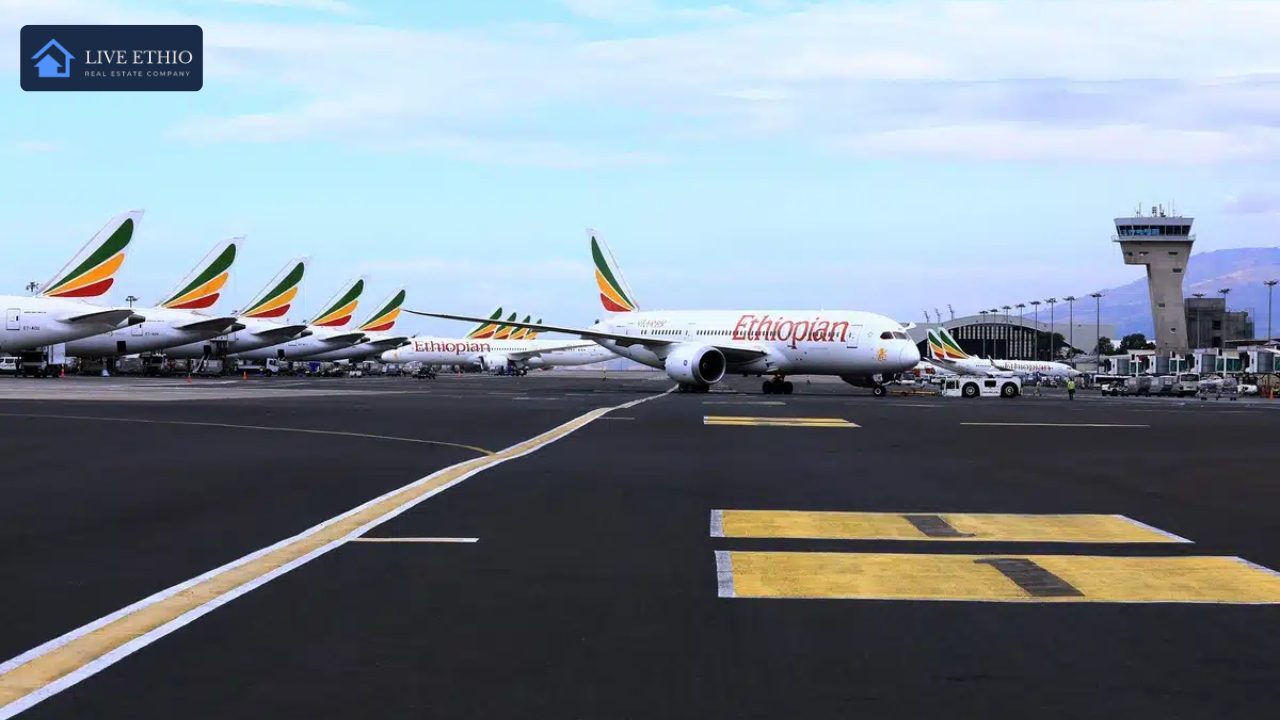
Ethiopia has taken a historic leap forward in its development journey with the official launch of construction on what is projected to become Africa’s largest airport, the Bishoftu International Airport. On January 10, 2026, Ethiopian Airlines and the Ethiopian government inaugurated the aviation mega-project in Bishoftu about 45 kilometers southeast of Addis Ababa marking a defining moment for both the nation and the continent’s aviation landscape.
Once completed, the Bishoftu International Airport will be capable of handling up to 110 million passengers annually and parking as many as 270 aircraft, making it more than four times larger than the current capacity of Addis Ababa’s Bole International Airport. For context, Bole International, which sits at the heart of Ethiopia’s global connectivity, currently manages around 25 million passengers each year and is forecast to reach its maximum traffic limits within the next few years.
A Bold Vision Beyond Capacity
The Bishoftu project is not simply about building a bigger airport. It represents a strategic pivot toward transforming Ethiopia into a premier global and continental hub for trade, travel, and logistics. The airport project is part of a broader multi-airport strategy designed to relieve pressure on existing infrastructure, accommodate rapid growth in demand for air travel, and support Ethiopia’s long-term economic ambitions.
The facility will be constructed in phases. The initial phase expected to be completed by 2030 will already handle tens of millions of passengers annually, setting the stage for full operational capacity later in the decade. Early works, including initial earthworks costing roughly $610 million, have already begun, with major civil construction scheduled to commence in mid-2026.
Economic Impact and Connectivity
The economic ripple effects of this project could be profound. During construction, thousands of skilled and unskilled jobs will be created. Once operational, the airport will spur growth in tourism, air cargo logistics, business travel, and related services such as hospitality, retail, and transportation. International financiers including the African Development Bank (AfDB), which has pledged significant project support and lenders from Europe, the Middle East, China, and the U.S. are backing the initiative.
Strategically located at an elevation and position favorable for aviation operations, Bishoftu International Airport will introduce new opportunities for direct long-haul flights, enabling Ethiopia to strengthen global links with Asia, the Americas, Europe, and beyond.
A Symbol of Continental Ambition
This project places Ethiopia at the forefront of Africa’s aviation revolution. Gone are the days when the continent lagged far behind other regions in world-class airport infrastructure Bishoftu is poised to rival major international hubs such as Dubai and Istanbul in scale and capability. More importantly, it underscores Ethiopia’s growing role as an economic engine and gateway across Africa.
In a world where connectivity drives competitiveness, the launch of this airport is a bold statement of intent. It demonstrates Ethiopia’s commitment to long-term vision over short-term constraints, and its desire to connect people, businesses, and nations through seamless travel and commerce.