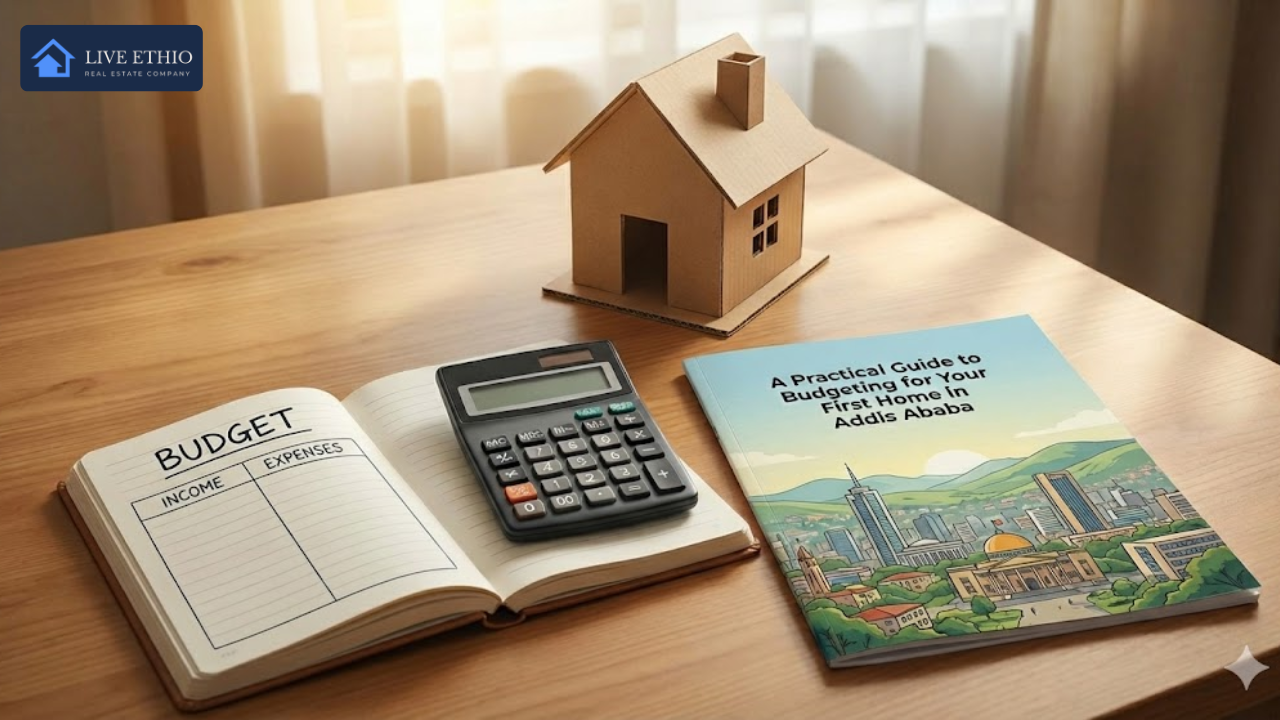
Budgeting for your first home whether you’re buying or renting can feel overwhelming, especially in a growing and competitive market like Addis Ababa. The key is understanding the real costs involved and planning ahead. This guide breaks everything down into simple steps so you can set a realistic budget that fits your lifestyle, income, and long-term goals.
1) Start With Realistic Market Expectations
Before budgeting, understand the price ranges across Addis Ababa. A standard 80–120 m² apartment often falls between USD 100,000–250,000, depending on location and finishing quality. Larger standalone homes or villas can cost significantly more, especially in premium neighborhoods.
- Apartments for sale vary widely across Kazanchis, Bole, CMC, and Summit.
- Houses for sale tend to be pricier but offer more space and flexibility for families.
If you plan to rent first, a typical 2-bedroom apartment in central locations can cost ETB 40,000–60,000+ monthly, while houses in residential areas often fall on the higher end.
- Apartments for rent are ideal for convenience and amenities.
- Houses for rent suit families who need more privacy and outdoor space.
2) One-Time Costs to Include in Your Budget
Whether buying or renting, there are upfront expenses you must prepare for. For buyers, the biggest cost is the down payment, usually 10%–40% depending on the seller or bank.
- You’ll also need to budget for legal/transfer fees and documentation.
- Some buyers also set aside a furnishing or renovation fund.
Renters also face significant one-time costs, especially advance payments. Many landlords require 6–12 months upfront, and in some cases more depending on property demand.
- There’s also an agent or service fee, depending on the agency.
- A refundable deposit may also be requested before move-in.
3) Monthly Costs You Should Expect
Your monthly housing cost goes beyond rent or mortgage payments. Utilities like electricity, water, garbage services, and internet can add up quickly in Addis Ababa.
- Some buildings also charge maintenance or security fees.
- If your building uses a generator, expect slightly higher electricity bills.
Transportation and lifestyle costs should also be included. A home far from work may require higher fuel or ride-hailing expenses.
- Parking fees may apply in gated communities or apartment complexes.
- Always include a 10–20% buffer for unexpected monthly increases.
4) A Simple Budgeting Template to Use
Buyers can use this quick structure:
- Purchase price: Start with your target amount, then calculate the down payment (15%–30%).
- Additional costs: Add legal fees and a small renovation or furnishing budget.
Renters should structure their budget like this:
- Advance rent: For long-term rentals in Addis Ababa, it’s common for landlords to request 3–6 months of rent upfront as a one-time payment before you move in. This is why budgeting ahead is important the upfront amount is usually the biggest expense for renters.Move-in expenses: Include agent fees and basic setup (internet, small fixes).
For both buyers and renters, calculate your monthly housing cost (mortgage/rent + utilities + maintenance).
- Aim to keep this within 30–35% of your income for stability.
- Adjust this percentage if you have large family or lifestyle expenses.
5) Practical Steps to Make the Budget Work
Always start by researching updated market prices for your preferred neighborhoods. Listings change often, so check regularly before committing.
- Compare prices from multiple sources rather than relying on one listing.
- Keep a list of average prices for houses and apartments in each area.
Next, explore your financing or payment options. Diaspora loans, mortgages, or negotiated payment plans can ease the initial financial pressure.
- Sellers and landlords often accept negotiable terms if approached professionally.
- Build a small emergency fund for unexpected housing-related expenses.